• The GPNMB–RYK ligand–receptor pathway—a novel therapeutic target for MASH
    Metabolic dysfunction-associated steatotic liver disease/steatohepatitis (MASLD/MASH) has become the most common chronic liver disease worldwide. Due to increasing obesity and metabolic problems, more than 30% of people globally have varying degrees of fatty liver disease. Current approved drugs mainly include resmetirom and semaglutide, but these are limited in number, expensive, and have restric...
    2026-02-27
  • Breakthrough by scientists in ultra-wideband fiber–wireless communication
    On February 19, a breakthrough study was published online in Nature in a paper titled “Integrated photonics enabling ultra-wideband fiber–wireless communication.” This work was jointly completed by Associate Professor Chen Baile from the School of Information Science and Technology (SIST) at ShanghaiTech, Professor Wang Xingjun and Assistant Professor Shu Haowen at Peking University, a...
    2026-02-27
  • Scientists reveal multiple compositions and fully open state of native NMDA receptors in the brain
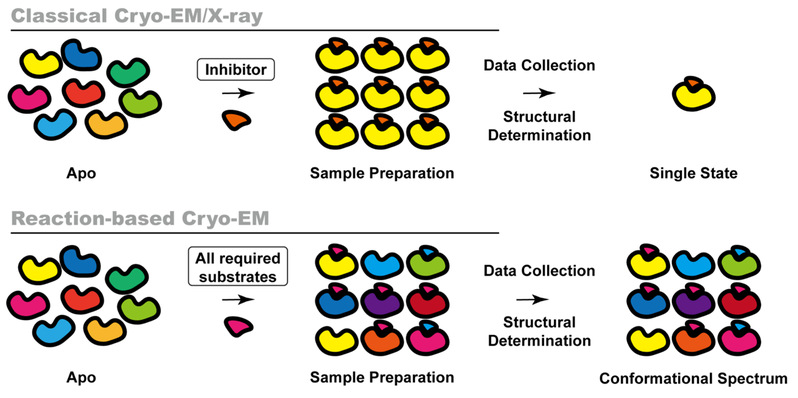
    On February 11, a research team led by Ge Jingpeng from the School of Life Science and Technology (SLST) at ShanghaiTech University and Yu Jie from the Interdisciplinary Research Center on Biology and Chemistry (IRCBC) at the Shanghai Institute of Organic Chemistry published a study in Nature entitled “Conformational diversity and fully opening mechanism of native NMDA receptor.” ...
    2026-02-27
  • mTOR inhibitors broadly enhance the efficacy of proteasome-dependent targeted protein degradation approaches
    Targeted protein degradation (TPD) approaches represent a breakthrough in drug development. Unlike traditional occupancy-driven inhibitors, TPD exploits the ubiquitin-proteasome system (UPS) to eliminate disease-causing proteins that were previously considered “undruggable.” Currently, several TPD drugs have shown clinical potential in treating many diseases. However, with extended treatment, pa...
    2026-02-03
  • ShanghaiTech University holds its first General Faculty Meeting of 2026
    On January 28, ShanghaiTech University convened its first General Faculty Meeting of 2026 in the University Auditorium. The meeting was presided over by Vice President Jiang Ge. President Feng Donglai also spoke at the meeting. Other university leaders including Yin Jie, Zhu Zhiyuan, Ding Hao, Cui Yong, Wu Qiang, Zhang Qi, Yu Jingyi, Luo Zhengge, and Liu Zhi were present. They reported on progress...
    2026-02-03
  • Scientists introduce a foundation model for cervical cytology screening
    A team led by Professor Wang Qian from the School of Biomedical Engineering (BME) at ShanghaiTech University has published a new study in Cell Reports Medicine. The paper, titled “UniCAS: A foundation model for cervical cytology screening,” presents a specialized AI foundation model built for automated cervical cancer screening using ThinPrep Cytology Test (TCT) slides.Cervical cancer ...
    2026-01-30
  • BME team develops stretchable Doppler ultrasound patch for continuous blood flow monitoring
    A research team led by Assistant Professor Peng Chang from the School of Biomedical Engineering (BME) has published a groundbreaking study in the journal Measurement. The paper reports a stretchable wearable Doppler ultrasound patch designed for continuous blood flow monitoring. This lightweight and flexible patch, which adheres stably to the skin during daily activities, has the po...
    2026-01-29
  • ShanghaiTech scientists release next-generation universal model for atoms
    Recently, the team led by Professor Hu Peijun at the School of Physical Science and Technology (SPST) at ShanghaiTech University made significant progress in the field of AI-driven materials science. Their independently developed machine learning interatomic potential model, TACE (Tensor Atomic Cluster Expansion), demonstrated exceptional performance and was featured on Matbench Discovery, a globa...
    2026-01-26
  • Scientists develop mosaic lateral heterostructures for next-generation light-emitting devices
    A research group led by Associate Professor Yu Yi from the School of Physical Science and Technology (SPST), ShanghaiTech University, in collaboration with teams from Purdue University and the University of Science and Technology of China, have made a significant breakthrough in fabricating patterned lateral heterostructures in two-dimensional (2D) halide perovskites. The study was published onlin...
    2026-01-20
  • Dual-pathway framework overcomes the naturalness-intelligibility trade-off in reconstructing authentic speech from brain signals
    Recently, the research group led by Assistant Professor Li Yuanning from the School of Biomedical Engineering (BME) at ShanghaiTech University proposed an efficient acoustic-linguistic dual-pathway framework that achieves reconstruction of sentence-level speech with both naturalness and intelligibility, using only about 20 minutes of high-density electrocorticography (ECoG, a technique that d...
    2026-01-14
  • Two ShanghaiTech courses recognized as third batch of National First-Class Undergraduate Courses
    In December, the Ministry of Education officially announced the list of courses that are recognized as third batch of National First-Class Undergraduate Courses. ShanghaiTech’s two undergraduate courses—“Social Engagement Education” and “Electric Circuits”—have been selected, marking another milestone in the university’s ongoing efforts to advance development in course content and teaching.&...
    2026-01-06
  • Why does 3D-printed titanium alloy become brittle? ShanghaiTech team identifies the key crack source
    Recently, the research group led by Assistant Professor Zhang Zhenbo at the Center for Adaptive System Engineering (CASE), School of Creativity and Art (SCA), ShanghaiTech University, published a research paper in Acta Materialia. The study revealed the hidden driver behind crack initiation in 3D-printed high-strength titanium alloys under extreme conditions, such as the deep sea, p...
    2025-12-30
  • Scientists reveal the pathogenic role of dysplastic epithelial cells in lymphocyte tissue residence and alveolar regeneration
    On December 23, Assistant Professor Xi Ying’s lab at the School of Life Science and Technology (SLST), in collaboration with Prof. Ren Tao from Shanghai Sixth People’s Hospital and Prof. Zhao Jincun from Guangzhou Medical University/Guangzhou Laboratory, published a paper entitled “Dysplastic epithelial repair promotes the tissue-residence of lymphocytes to inhibit alveolar regeneration post vi...
    2025-12-29
  • ShanghaiTech University convenes the first plenary meeting of the third session of the University Governing Board
    On December 19, ShanghaiTech University held the first plenary meeting of the third session of the University Governing Board. The meeting was presided over by Jiang Mianheng, Chair of the University Governing Board. The meeting included a report on the university’s recent progress in key initiatives and an introduction of nominations for appointments and removals, followed by voting. T...
    2025-12-24