

Can artificial intelligence (AI) design new drugs? Can machine learning tools accelerate gene editing? These are the kinds of real-world research questions that students from across East China tackled in the first Global Collegiate Life Sciences Competition (GCLSC). The regional review concluded at ShanghaiTech on October 9, 2026.
Launched by the Alliance of Open Life Science, the GCLSC is an international competition open to undergraduate and graduate students worldwide. Centered on real-world challenges at the intersection of AI and life sciences, GCLSC aims to foster innovation by bringing AI approaches to key scientific questions in life sciences. The inaugural edition features four tracks: AI-driven macromolecule and peptide drug design; AI-driven gene editing and nucleic acid tool design; virtual screening of small-molecule drugs targeting ion channels, GPCRs, and other drug targets; and delivery vector design. Participants compete in separate undergraduate and graduate divisions.
ShanghaiTech served as the host institution for the East China regional competition, coordinating the review process under the guidance of the competition organizing committee. The expert review panel comprised experts in life sciences, AI, and related interdisciplinary fields from universities and research institutions across East China. The university coordinated the review arrangements, expert recruitment, and on-site operations, while providing logistical and technical support to ensure a smooth and efficient review process.
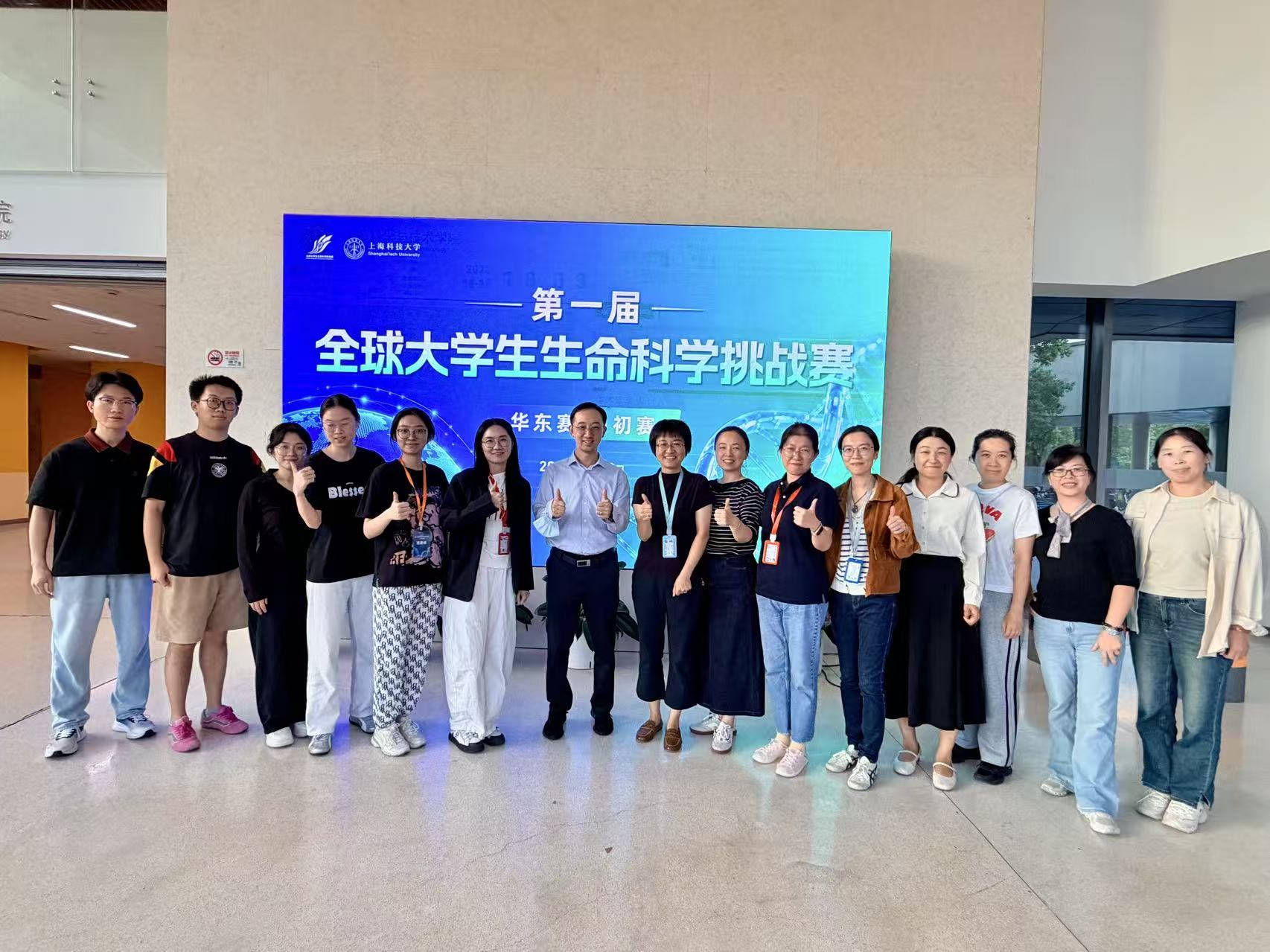 Participating faculty and staff from ShanghaiTech’s School of Life Science and Technology pose for a group photo after the review.
Advancing teams will proceed to the final round in Guangzhou, scheduled for mid-to-late October, where they will present their work in person.