

As life expectancy continues to rise, the 100-year life is moving from a distant possibility to a realistic future. This demographic shift is not only a social issue but also a major force reshaping economic structures, productivity, and governance. It calls for systemic reconstruction across macro strategies, financial systems, industrial models, and individual lifestyles.
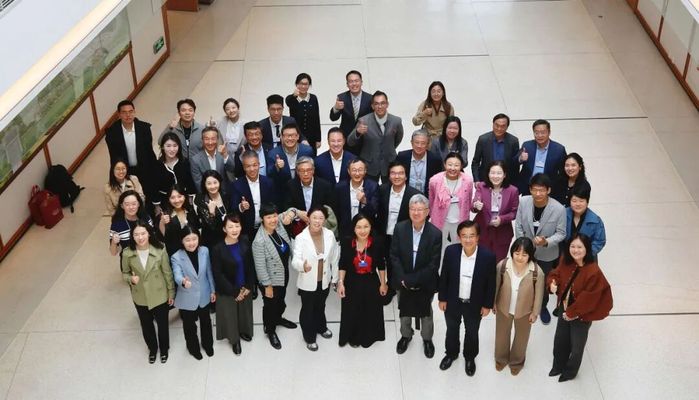
Focusing on the longevity economy, the high-level closed-door seminar titled “Longevity Economy: Reconstructing Systems for the 100-Year Life” was held at ShanghaiTech University last month. Co-hosted with the World Economic Forum (WEF), the event brought together representatives from macro policy, finance, healthcare, science and technology, and industry to engage in in-depth discussions on the systemic challenges and structural transformations associated with aging societies.
Gim Huay Neo, managing director and member of the WEF Managing Board, noted that over the next few decades, the world will see two billion people aged 60 and above, with China’s elderly population exceeding several hundred million. Longevity is reshaping consumption, production, and caregiving models, while placing systemic pressure on healthcare, pension finance, and labor markets. She emphasized that the WEF advocates systemic innovation to achieve dual goals of health and wealth, fostering intergenerational solidarity and sustainable development in aging societies.
Feng Donglai, president of ShanghaiTech, stated that scientific and technological innovation, along with educational reform, are essential to the systemic reconstruction of the longevity economy. ShanghaiTech will continue to advance breakthroughs in extending healthy life expectancy, medical innovation and clinical translation, as well as policy research and technology transfer, leveraging innovation-driven productive forces to support the vision of the 100-year life.
Macro-level reconstruction: from growth-oriented to wellbeing-oriented development
Participants agreed that a longevity society first poses structural challenges at the macro level. Macroeconomic systems need to shift from investment-driven growth toward a more people-centered development model, placing health and longevity at the core of economic and social goals. China’s total health expenditure as a share of GDP remains relatively low, indicating substantial room to increase investment in elderly care, healthcare, and long-term support systems.
Financial system reconstruction: from pension finance to longevity finance
The seminar highlighted the rapid growth of the elderly care industry alongside gaps in financial services and investment. Experts called for accelerating the development of a broader “longevity finance” system, improving long-term savings, risk protection mechanisms, and diversified financing channels to better support healthcare and caregiving industries.
Industrial system reconstruction: from elderly care to longevity industry
Traditional eldercare models should evolve into a full-lifecycle “longevity industry,” encompassing health promotion, chronic disease management, rehabilitation, and age-friendly services. Technologies such as AI-assisted medical imaging, brain-computer interfaces, and wearable devices are enabling earlier detection and continuous health monitoring. The key challenge lies in scaling up these innovations and integrating them effectively with service delivery and payment systems.
Personal reconstruction: from linear lifecycle to multi-stage life
For individuals, the 100-year life requires a fundamental rethink of life planning. Traditional linear paths of education–work–retirement are being replaced by multi-stage, flexible life structures. Individuals will need stronger financial planning, continuous learning, and proactive health management to thrive across longer lifespans.
Conclusion
The core issue of the longevity economy is not merely responding to a challenge, but embracing an opportunity for systemic transformation. Only by placing people at the center and carrying out comprehensive reconstruction can society transform the 100-year life into a shared and promising future.