—By Gu Qian, PhD student at ShanghaiTech University
Currently taking part in a one-year public service program in Yining Border Economic Cooperation Zone, Ili Kazakh Autonomous Prefecture, Xinjiang
For years, my understanding of China’s western frontier came mostly from literature and imagination. After joining a national volunteer service program in western China, in July 2025, I left behind my daily life in the laboratory, packed my bags, and traveled thousands of kilometers west to Yining, a border city at the foot of the Tianshan Mountains in Xinjiang.
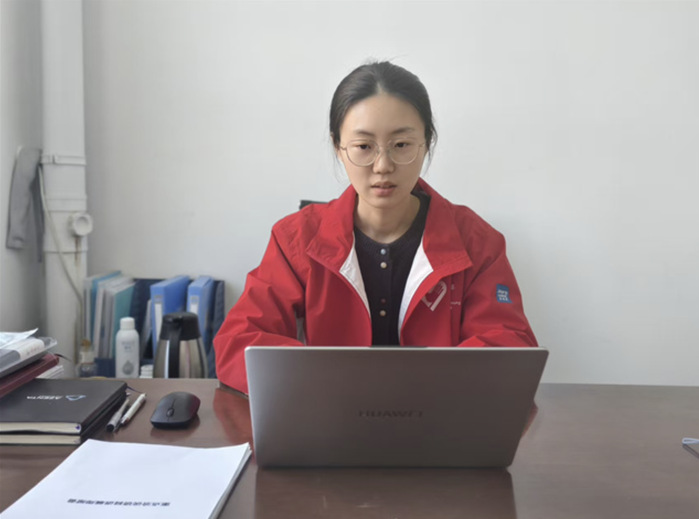
My reasons for coming were simple: I wanted to see firsthand how China’s border regions are developing, and I hoped to contribute, in whatever way I could, where I was most needed.
I am currently serving at the Investment Promotion Service Center of the Yining Border Economic Cooperation Zone. For someone trained in biology, investment promotion and regional economic development felt like an entirely unfamiliar world. Alongside excitement came a quiet sense of uncertainty.
On my first day, my colleagues introduced me to the workflow behind development projects—from land-use procedures and business registration to bank account setup and permit applications. They mentioned terms I had never encountered before: filing procedures, project approvals, and project site maps. I wrote everything down carefully, though at times I could not even tell whether I had heard the terminology correctly.
At that moment, I realized this experience resembled entering a completely new research field. To truly understand it, I would have to start from the beginning.
In the weeks that followed, the unfamiliarity only deepened. One day, a colleague handed me a list of key projects under discussion: thermal energy recycling, smart cold-chain logistics, independent energy storage stations, among others. I could roughly guess the industries they belonged to, but I knew almost nothing about their operational needs, development stages, or implementation conditions.
During departmental meetings, colleagues took turns discussing project progress and investment requirements. Listening to the unfamiliar terminology and streams of numbers, I often felt as if a fog hung over my thoughts. I wanted to ask questions, but did not even know where to begin.
The turning point came during an ordinary afternoon.
My supervisor asked me to organize a research report on by-products from coal chemical industries. As I worked through unfamiliar technical terms, I suddenly realized something: the logic of understanding industrial “upstream” outputs and “downstream” applications was not entirely different from the analytical thinking I had developed in biology research.
At that moment, I stopped asking whether my academic background “matched” the job. Instead, I began asking how I could use my own way of thinking to understand the work in front of me.
Gradually, I found my rhythm.
I brought the habits of scientific research—careful documentation, systematic analysis, and attention to detail—into project coordination work. I began creating detailed records for each project, documenting every stage from initial discussions to contract signing and construction.
I currently help track six newly launched projects, including logistics parks, machinery manufacturing facilities, and advanced material production lines. My work includes assisting with investment agreements, helping newly established companies complete registration and banking procedures, and coordinating practical issues such as temporary water and electricity access.
The procedural details that once overwhelmed me have now become part of my daily routine.
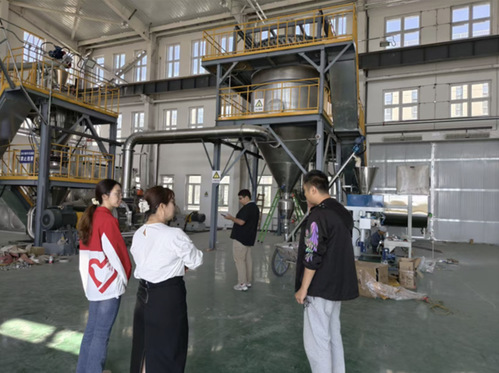
Gu Qian (first from left) and her colleagues visit a local factory.
One day, after delivering a business license to the head of a machinery manufacturing company, he shook my hand and simply said, “Thank you for your hard work.”
That moment helped me understand what service truly means.
The sense of fulfillment feels different from publishing an academic paper. It is quieter, but also more grounded.
The laboratory taught me rigor, patience, and systematic thinking. My experience in Xinjiang has taught me something equally important: how to serve communities, adapt to unfamiliar environments, and grow through challenges.
I came to Xinjiang hoping to better understand this region. In the process, it also gave me an opportunity to better understand myself.
From the laboratory to the border, this journey has changed the way I think about contribution and responsibility. The original reason I came here has not changed, only the form it has taken.